Restaurant Fire Suppression Systems: Types, Codes & Costs
March 7, 2026 · 11 min read
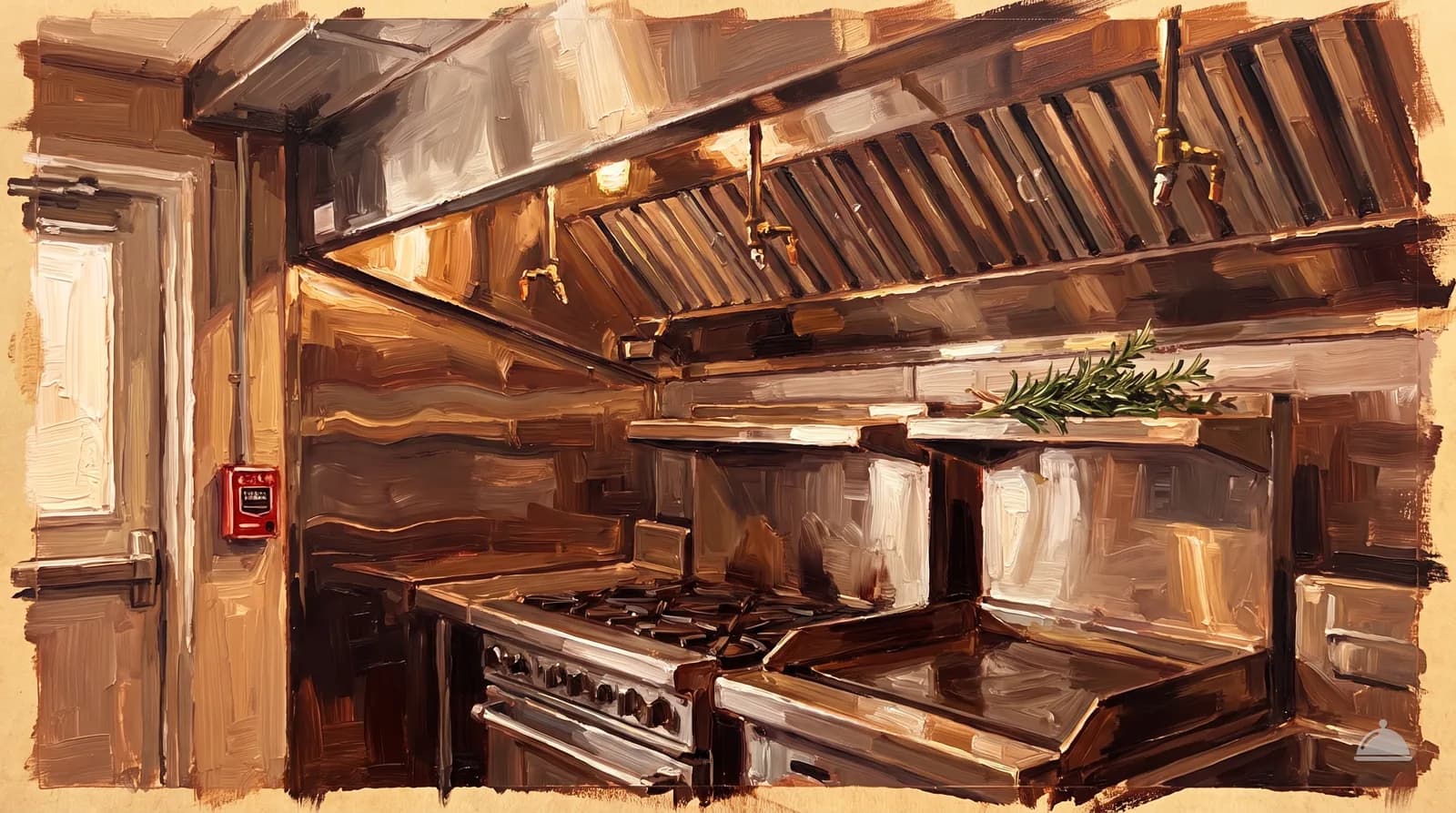
Kitchen
is where most restaurant fires start
A kitchen fire can mean thousands of dollars in property damage, plus weeks of lost revenue during repairs. A code-compliant fire suppression system is not just legally required — it is the single most important piece of safety equipment in your restaurant.
Every commercial kitchen that produces grease-laden vapors must have an automatic fire suppression system — no exceptions. Whether you are opening your first restaurant, renovating an existing kitchen layout, or getting flagged during an inspection, this guide covers every system type, the code requirements you must meet, what installation actually costs, and how to stay compliant year after year.
Types of Fire Suppression Systems
Three system types exist for commercial kitchens. Only one — wet chemical — meets current UL 300 standards for cooking equipment protection. Understanding the differences is critical before you spend a dollar.
Wet Chemical
Agent: Potassium carbonate solution
Sprays a fine mist of wet chemical agent that reacts with cooking oils to form a soapy foam (saponification), smothering the fire and cooling the surface below its auto-ignition point.
Best for: Deep fryers, griddles, char-broilers, woks, any grease-producing equipment
Bottom line: Required for virtually all commercial kitchens. This is the system your fire marshal expects to see.
Dry Chemical
Agent: Sodium bicarbonate or monoammonium phosphate powder
Releases a cloud of dry powder that interrupts the chemical reaction of the fire. Effective but does not cool surfaces.
Best for: Older systems, non-cooking areas, storage rooms with flammable materials
Bottom line: No longer code-compliant for kitchen hoods. If you have one, you must upgrade to wet chemical.
Water Mist
Agent: Ultra-fine water droplets (< 200 microns)
Discharges atomized water that cools the fire and displaces oxygen. The tiny droplet size prevents grease splashing that regular sprinklers cause.
Best for: Specialty applications, heritage buildings, areas where chemical cleanup is impractical
Bottom line: Emerging technology. Check with your local AHJ before specifying — not all jurisdictions accept water mist for kitchen hoods.
Do not count on grandfathering. Fire marshals and service companies treat a pre-UL 300 dry chemical hood system as due for replacement, and parts for old systems get harder to find every year. If your kitchen still runs a dry chemical hood system, your insurance carrier may deny fire-related claims.
NFPA 96 & UL 300 Requirements
Two standards govern restaurant fire suppression: NFPA 96 (Standard for Ventilation Control and Fire Protection of Commercial Cooking Operations) and UL 300 (Fire Testing of Fire Extinguishing Systems for Protection of Commercial Cooking Equipment). Your local Authority Having Jurisdiction (AHJ) — typically the fire marshal — enforces both.
NFPA 96 Key Requirements
NFPA 96 is the master code for commercial kitchen fire safety. It covers ventilation, hood design, ductwork, cleaning, and suppression system requirements. Most state and local fire codes adopt NFPA 96 by reference.
- Automatic fire suppression for all grease-producing cooking equipment
- Hood exhaust plenums and ductwork must be within the suppression zone
- Manual pull station on the kitchen exit path, a set distance from the hood (your adopted fire code gives the range)
- Automatic fuel/gas shutoff when system activates
- Automatic exhaust fan shutoff when system activates
- Semi-annual inspections by a licensed fire protection company
- Hood cleaning on the schedule your cooking volume requires
- Access panels in ductwork for inspection and cleaning
UL 300 Testing Standard
UL 300 was introduced in 1994 after research showed older dry chemical systems could not reliably suppress fires in modern high-efficiency fryers using vegetable oils. Any system protecting cooking equipment must carry a UL 300 listing.
- System must extinguish fires in deep fryers, griddles, and char-broilers
- Must prevent re-flash (re-ignition) after suppression
- Agent must cool cooking surfaces below auto-ignition temperature
- System must operate automatically via fusible links or electronic detection
- Nozzle placement must cover all protected cooking appliances
- Listed and labeled by a nationally recognized testing lab (UL, FM, etc.)
“The fire marshal does not care which brand you install. They care about three things: UL 300 listing, NFPA 96 compliance, and a current inspection tag.”
Getting AHJ Approval
Before your restaurant can open, the fire suppression system must pass inspection. Budget 4-8 weeks for the full approval timeline.
Building Permit
Required before installation. Your contractor files this, but you must verify it is pulled.
Fire Marshal Plan Review
Submit suppression system plans to the local fire marshal before installation begins. Turnaround is typically 2-4 weeks.
Final Inspection & Sign-off
After installation, the fire marshal or AHJ inspector tests the system and issues a certificate of compliance. You cannot open without this.
Keep records an inspector can see: NFPA 96 is now on its 2027 edition, and fire marshals expect proof of every inspection, cleaning, and repair on demand. Keep dated photos and service reports in a cloud folder — not just a paper logbook.
Installation Process (Step-by-Step)
A typical installation takes 4-8 weeks from initial survey to final sign-off. The actual hands-on work is only 1-3 days — most of the timeline is permitting and scheduling. Factor this into your startup timeline if you are building out a new kitchen.
Phase 1
1-2 weeksSite Survey & Design
- Licensed fire protection contractor surveys your kitchen
- Measures hood dimensions, duct runs, and cooking equipment layout
- Identifies all appliances that produce grease-laden vapors
- Creates system design with nozzle placement and agent calculations
- Submits plans to fire marshal for review
Phase 2
2-4 weeksPlan Review & Permitting
- Fire marshal reviews suppression system plans
- Building department issues installation permit
- Contractor orders equipment and schedules installation
- Coordinate with your hood and ventilation installer if doing a full buildout
Phase 3
1-3 daysInstallation
- Mount suppression tank(s) and distribution piping
- Install nozzles above each protected appliance
- Install fusible links in the hood plenum (melt at 360-500°F)
- Connect manual pull station near kitchen exit
- Wire gas/electric shutoff interlocks
Phase 4
Same dayIntegration & Wiring
- Connect system to building fire alarm panel
- Wire automatic shutoffs for gas supply and exhaust fans
- Test all electrical interlocks
- Verify manual pull station triggers full system discharge
Phase 5
1 dayAcceptance Testing
- Contractor performs functional test of entire system
- Verify nozzle coverage over all protected equipment
- Confirm fusible links are properly positioned
- Test gas shutoff and fan shutoff interlocks
- Document test results for AHJ inspection
Phase 6
1-2 weeks (scheduling)Fire Marshal Inspection
- Fire marshal inspects installed system against approved plans
- Tests manual pull station and automatic activation
- Verifies UL 300 listing label on equipment
- Issues certificate of compliance upon passing
- System receives first inspection tag
Pro tip: Hire a fire protection contractor who also services kitchen hoods. Bundling suppression installation with hood cleaning contracts typically saves 10-15% on the combined annual cost.
Cost Breakdown: What to Budget
Fire suppression costs vary widely based on kitchen size, hood length, number of protected appliances, and local labor rates. These are typical ranges, not quotes; get two or three local bids. Factor these into your overall startup budget — and remember that equipment financing can cover suppression systems.
Small Kitchen
Single hood, 1-2 fryers, under 12 ft hood length
e.g., Food truck, coffee shop with fryer, small takeout
$3,800-$6,500
installed
$3,000-$5,000
Equipment
$800-$1,500
Labor
$400-$700
Annual Maint.
Mid-Size Kitchen
Most Common1-2 hoods, multiple appliances, 12-20 ft hood coverage
e.g., Full-service restaurant, pizzeria, casual dining
$6,500-$12,000
installed
$5,000-$9,000
Equipment
$1,500-$3,000
Labor
$800-$1,500
Annual Maint.
Large Kitchen
Multiple hoods, complex ductwork, 20+ ft coverage
e.g., Hotel kitchen, banquet facility, high-volume restaurant
$12,000-$21,000
installed
$9,000-$15,000
Equipment
$3,000-$6,000
Labor
$1,500-$2,500
Annual Maint.
Additional & Recurring Costs
| Item | Cost Range |
|---|---|
| Hood cleaning (per cleaning) | $250-$600 |
| Semi-annual inspection | $150-$500 |
| Recharge after discharge | $500-$1,200 |
| Fusible link replacement (set) | $15-$40 |
| Nozzle cap replacement (set) | $20-$50 |
| Gas shutoff valve (if not existing) | $200-$500 |
| Fire alarm panel tie-in | $300-$800 |
| Permit & plan review fees | $150-$500 |
The ROI math is simple
A serious kitchen fire means repair bills plus weeks of closure with no revenue coming in, and the lost sales usually cost more than the damage itself. A $6,500 suppression system pays for itself the first time it does not let a grease fire become a structure fire.
Inspection & Maintenance Schedule
NFPA 96 sets a strict inspection cadence. Missing even one semi-annual inspection can put your insurance coverage at risk and result in citations from the fire marshal. Set calendar reminders — do not rely on your service company to initiate.
Monthly
Performed by: Kitchen manager / owner- Visual check: nozzle caps in place, no obstructions
- Verify manual pull station is accessible and unobstructed
- Check pressure gauge on agent tank (green zone)
- Confirm fusible links are not bent, corroded, or painted over
- Verify gas shutoff valve operates freely
- Log inspection date and initials
Semi-Annual (Every 6 Months)
Performed by: Licensed fire protection company- Full functional test of detection and activation systems
- Replace fusible links (required at every semi-annual)
- Inspect all nozzles, piping, and fittings for damage or grease buildup
- Verify agent charge level and expiration dates
- Test gas and electrical interlocks / shutoffs
- Test manual pull station
- Inspect and clean hood and duct access panels
- Issue new inspection tag with next due date
- Provide written inspection report
Annually
Performed by: Licensed fire protection company- Complete system recertification
- Replace agent cylinders if past manufacturer expiration
- Comprehensive ductwork inspection
- Update system records and documentation
- Verify system design still matches current kitchen layout
Hood Cleaning Frequency (Rule of Thumb)
Hood cleaning is separate from system inspection. NFPA 96 sets the minimum interval by cooking volume, and local fire codes can be stricter: New York City requires every commercial kitchen exhaust system to be cleaned at least every 3 months (NYC Fire Code Table 609.5.3.3). Treat the table below as an operating rule of thumb, not a code table, and confirm your legal minimum with your fire marshal and hood cleaner.
| Volume | Examples | Cleaning Freq. |
|---|---|---|
| High-volume / 24/7 | 24-hour diners, fast food with heavy frying | Monthly |
| Moderate-volume | Full-service restaurants, casual dining | Quarterly |
| Low-volume | Churches, daycares, seasonal kitchens | Semi-annually |
| Minimal grease | Pizza ovens only (no deep frying) | Annually |
Non-Compliance Consequences
- Fines per violation (amounts are set locally)
- Forced closure until deficiencies are corrected
- Insurance claim denial for fire-related losses
- Personal liability for owners if fire causes injury
- Failed health department inspections (fire safety is often part of the checklist)
Quick Reference Checklist
Print this checklist and keep it in your kitchen manager's office. Review it monthly.
Always Do
- Install a UL 300-listed wet chemical system on all cooking equipment
- Schedule semi-annual inspections with a licensed fire protection company
- Perform monthly visual checks (nozzles, pull station, pressure gauge)
- Replace fusible links at every semi-annual inspection
- Keep digital records of all inspections and cleanings with timestamps
- Budget for annual maintenance: $400-$2,500 depending on kitchen size
- Verify your system design matches your current kitchen layout after any changes
- Ensure all kitchen staff know where the manual pull station is located
Never Do
- Operate with an expired inspection tag (fines + insurance voids)
- Modify your hood or cooking line without updating the suppression design
- Paint over or relocate fusible links
- Block the manual pull station with equipment or supplies
- Rely on a dry chemical system for cooking equipment (no longer code-compliant)
- Assume your landlord handles inspections (you are responsible)
- Skip hood cleanings to save money (grease buildup = fire risk)
- Forget to recharge the system after a discharge or test
$3K-$15K+
Typical Cost
Every 6 mo
Inspections
4-8 weeks
Install Time
UL 300
Required Code
Related Tools & Guides
Restaurant Insurance Guide
7 coverage types including property and liability insurance
Commercial Kitchen Layout Guide
Design your kitchen with proper ventilation and safety zones
Restaurant Startup Costs
Full cost breakdown including fire safety equipment
Food Truck Permits Guide
Fire suppression requirements for mobile kitchens
How to Start a Restaurant
Complete startup checklist with compliance steps
How to Pass a Health Inspection
The other inspection: what the health department checks and how to prep
Equipment Maintenance Checklist
Put suppression and exhaust inspections on a schedule