How to Pass a Health Inspection: What Inspectors Look For, Stop by Stop
August 24, 2026 · 14 min read
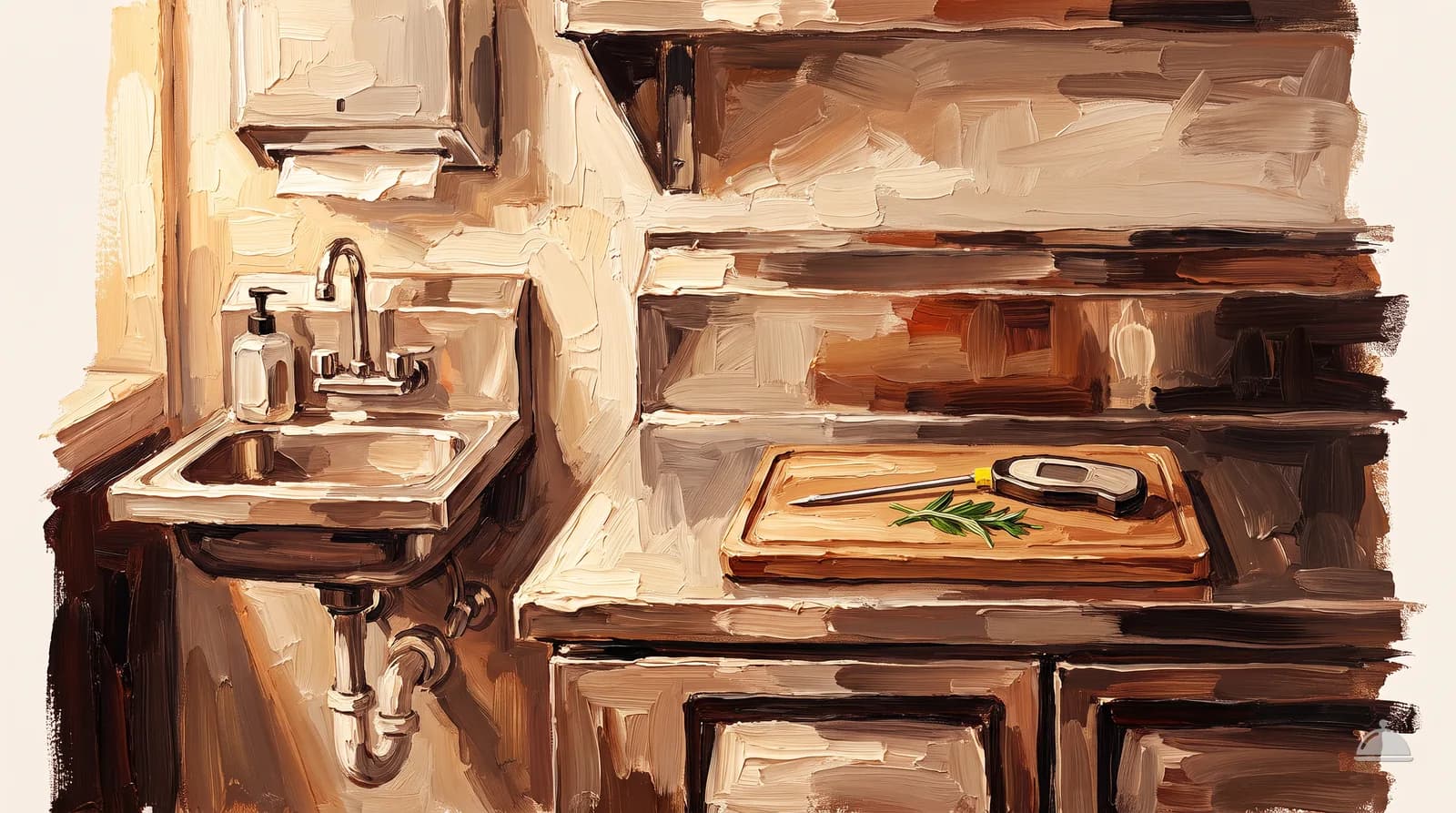
The inspector's first 60 seconds
What they notice before the clipboard opens. Fix these four and the rest of the visit gets easier.
- 0-10s
Front door and dining room
Sticky floor, cluttered host stand, flies at the window. The tone of the visit is set before they say hello.
- 10-25s
Restroom
Soap, paper towels, hot water, a working lock. Most inspectors check it before the kitchen because it predicts the kitchen.
- 25-40s
Hand sink at the kitchen door
Is it blocked by a bus tub? Empty soap pump? That is a priority item in most jurisdictions and it takes two seconds to spot.
- 40-60s
The line, at a glance
Open thermometer probe on the pass, sanitizer bucket that smells like nothing, uncovered pans in the lowboy. They have a list before they open the clipboard.
94%
of full-service restaurants had an improper holding violation (FDA 2017-18 study)
41°F
cold holding max, FDA Food Code 3-501.16
135°F
hot holding minimum, same section
Health inspectors are not looking for a spotless kitchen. They are looking for evidence that food is kept out of the 41°F to 135°F danger zone, that hands get washed, and that someone in the building is managing all of it. This guide follows the inspector through the door in the order they walk, shows which violations actually move the score (using the FDA's own risk factor study and New York City's public inspection dataset), and gives you a seven-day countdown to get ready. If you want the printable version of the walk, use the self-inspection checklist. This article is the why behind it.
How Health Inspections Work
Routine inspections are unannounced. That is the whole point: the inspector wants to see a Tuesday at 11:40, not the kitchen you staged for them. Frequency is set by risk. The FDA Food Code (2026 edition, the latest FDA has issued; each state adopts editions on its own schedule) sets a baseline of at least one inspection every 6 months in section 8-401.10, then lets the local health authority adjust by risk category under Annex 5.
| Risk category | Typical operation | Inspections |
|---|---|---|
| 1 | Pre-packaged or non-TCS food only; coffee shops, hot dog carts | 1x / year |
| 2 | Limited menu, cook-and-serve; quick service, schools | 2x / year |
| 3 | Full-service restaurant: raw proteins, cooling, reheating | 3x / year |
| 4 | Highly susceptible populations or specialized processes (curing, ROP, sous vide) | 4x / year |
Source: FDA Food Code Annex 5, Table 1. Local departments amend this (Andover, MA, for example, bumps new permits up one category for the first year). Complaints and foodborne illness reports trigger extra visits on top of the routine schedule.
Scoring is local. Three real systems.
There is no national score. The same walk-in at 44°F is a 7-point public health hazard in Manhattan, a major violation deduction in Los Angeles, and a High Priority citation with no number in Miami. Know which one you are playing before you worry about the number.
New York City
Points added, letter gradeYou start at 0 and every violation adds points. 0-13 is an A, 14-27 a B, 28+ a C. Critical violations start at 5 points, general at 2, and a public health hazard (food at unsafe temperature) at 7. Score 14+ and you get a re-inspection no sooner than 7 days later; the next cycle comes in 11-13 months for an A but only 3-5 months for 28+.
Per NYC DOHMH inspection cycle overview.
Los Angeles County
Points deducted from 100, letter grade90-100 is an A, 80-89 a B, 70-79 a C. Under 70 you get a numeric score card in the window instead of a letter. Score under 70 twice in 12 months and you are subject to closure. Any critical violation can close you regardless of score.
Per LA County DPH grading and posting requirements.
Florida (DBPR)
No score, no gradeViolations are tagged High Priority, Intermediate, or Basic. No number is published. You get 1-4 routine inspections a year, a callback visit if warnings were issued, and administrative complaints with fines up to $1,000 per offense if the callback fails.
Per Florida DBPR Division of Hotels and Restaurants.
Most other jurisdictions run a variant of one of these: a 100-point deduction sheet, a pass/fail form with priority tiers, or a hybrid. Your local department publishes its form. Print it, and build your self-inspection checklist in the same order the inspector uses. The person who holds the manager-level certification should be the one walking it.
The Walkthrough, in Inspector Order
Inspectors work front to back, clean to dirty, and they are trained to look at what your staff touches rather than what your staff says. The route below is the one most FDA-model forms follow. Run your own walk in the same order so nothing gets seen for the first time on inspection day.
Dining room & restrooms
- Restroom stocked: soap, towels or dryer, hot water, trash can, door closes
- Self-service areas: sneeze guards, clean utensils, ice scoop handle out of ice
- Pest evidence at doors, windows, booths (droppings, gnaw marks, flies)
Hand sinks & the manager
- Every hand sink: accessible, soap, towels, hot water, nothing stored in it
- Who is in charge? They will ask to see the food protection manager certificate and food handler cards
- Employee health policy: can the manager say what symptoms exclude a worker?
Cook line & hot holding
- Probe thermometer in hand. Hot-held food at 135°F or above, per FDA Food Code 3-501.16
- Cooking temps: 165°F poultry, 155°F ground meat, 145°F whole cuts and fish
- Rail temps in the lowboys and flip-tops, especially the top rail of the make table
Prep area & cold storage
- Cold holding at 41°F or below, in the product, not the air
- Date marking: ready-to-eat TCS food held over 24 hours dated and used or tossed within 7 days
- Storage order: ready-to-eat on top, poultry on the bottom; raw over cooked is a priority hit
- Cooling logs: 135°F to 70°F in 2 hours, then to 41°F within 6 total
Walk-in, freezer & dry storage
- Air thermometer present and readable; product in the door racks probed
- Everything 6 inches off the floor, covered, labeled
- Chemicals stored below and away from food; original or labeled containers
Dish pit & sanitation
- Dish machine: sanitizer strip or thermometer test in front of you
- Three-compartment sink set up right; sanitizer bucket at the right ppm with test strips on hand
- Backflow prevention on hose bibs; no leaks; floor drains clear
Back door & dumpster
- Door seals, screens, no gap under the door (a pencil should not fit)
- Dumpster lid closed, grease bin not overflowing, no standing water
- Pest control log and last service invoice
The Violations That Cost the Most Points
Two datasets tell the same story. The FDA's 2017-2018 Retail Food Risk Factor Study observed real full-service kitchens and recorded what was out of compliance. Temperature was the problem almost everywhere they looked.
Full-service restaurants out of compliance, FDA 2017-18 study
Source: FDA, “Occurrence of Foodborne Illness Risk Factors in Fast Food and Full-Service Restaurants, 2017-2018.” Same report: restaurants with a certified food protection manager on site had fewer items out of compliance.
What actually gets written up: NYC's public dataset
NYC publishes every sustained violation on its Open Data portal (DOHMH Restaurant Inspection Results, ~296,000 rows as of July 2026). Third-party analyses of that dataset consistently rank these five at the top. Note the pattern: the cheap 2-point cleanliness items are the most common, but the mice and temperature citations are the ones that push a score from A to B.
| Code | Violation | Tier | Share |
|---|---|---|---|
| 10F | Non-food contact surface improperly constructed or unclean | General | 13.8% |
| 08A | Facility not vermin proof; harborage or conditions conducive to pests | General | 10.4% |
| 04L | Evidence of mice or live mice present | Critical | 6.8% |
| 06D | Food contact surface not properly washed, rinsed, sanitized | Critical | 6.5% |
| 02G / 02B | Cold food above 41°F or hot food below 140°F (NYC's hot-holding line — the FDA Food Code figure is 135°F) | Public health hazard | 6.4% |
The five that close restaurants
Live pests, sewage backup, no hot water, no refrigeration, and an imminent contamination hazard. NYC, LA County, and Florida all list some version of these as grounds for immediate closure. None of them are a scoring problem. They are a shut-the-doors problem.
The fix for the temperature cluster is not more thermometers. It is a written procedure that says who checks, when, and what they do at 44°F. Put it in your kitchen SOPs and make the log sheet part of the shift. For the sanitation cluster, a daily, weekly, monthly cleaning checklist with initials does more than any deep-clean the night before.
The 7-Day Prep Countdown
You will not know the date. Use this when you open, when a manager changes, after a rough score, or any time the last inspection is more than four months old in a risk category 3 kitchen. Each day is a 90-minute block for one manager plus whoever is on the clock.
Click a day to expand. Day 7 is the furthest out.
- Pull the current food protection manager certificate and every food handler card. Expired ones get rescheduled today, not next week.
- Print your jurisdiction's inspection form. That is your checklist for the next six days.
- Confirm the pest control contract is current and the last service report is in the binder.
- Check the permit, certificate of occupancy, and last inspection report are posted or filed where the inspector will ask.
How to Behave During the Inspection
The inspector decides how much to write up. That is not cynicism, it is how condition levels and corrected-on-site notations work. A manager who walks with them, fixes things immediately, and does not argue ends up with a shorter report than a manager who hides in the office.
Do
- Ask for ID, then say: "I'll walk with you. Tell me what you see and I'll fix what I can now."
- Fix on the spot: move the bus tub, refill the soap, discard the undated pan, re-probe the soup. Corrected-on-site is noted on most forms and scores lower in NYC and LA.
- Take your own temperatures alongside theirs. If your probe reads 40°F and theirs 43°F, say so calmly and offer a calibration check.
- Have the binder ready: certificates, logs, pest reports, last inspection. Hand it over unasked.
- Ask them to explain any citation you do not understand. Inspectors will teach if you let them.
Do not
- Argue, or send the cook who "knows the code" to argue. Your appeal is at the hearing, not on the line.
- Leave them alone in the kitchen. You lose the chance to correct and you lose context for the report.
- Stage a frantic clean-up in front of them. It reads as "this is not how we normally operate."
- Offer food, drinks, or anything else. In most jurisdictions that is a separate, worse problem.
- Sign the report without reading it. Signing acknowledges receipt, not agreement, but read every line first.
“The inspector is not grading your kitchen. They are grading whether your kitchen is managed. Walk with them and you answer that question before they ask it.”
After the Inspection: Correcting, Re-inspection, Appeals
A failed health inspection rarely means closure. It means a correction window, a re-inspection, and a public record. What happens next depends on how fast you move.
- Same day
Read the report line by line. Sort violations into fixed-on-site, fix-this-week, and needs-a-contractor. Every one of them gets an owner and a date.
- Within 24-72 hours
Priority items usually carry a short correction window. Florida wants High Priority items corrected before the next meal period; NYC re-inspects no sooner than 7 days after a 14+ score. Ask the inspector what yours is before they leave.
- Before re-inspection
Photograph every fix with a date. Pull invoices for repairs. Update the SOP that let it happen. Walk the whole route again, not just the cited items.
- Posting the result
Where grades exist, post immediately where required. NYC lets you post the grade or a Grade Pending card while a hearing is open; LA County requires the card stay up until the next routine inspection. Hiding the card is its own violation.
- Appeals
NYC hears contested violations at OATH, where a judge can dismiss, reduce, or uphold. Other jurisdictions run informal reviews or administrative hearings. Bring the photos, the logs, and a calm manager. Do not bring the argument you wanted to have on inspection day.
If you were closed, reopening requires an inspector to confirm the hazard is gone. Pests, sewage, hot water, and refrigeration are the usual four. Fire suppression tags come up too, since an expired tag is often cross-referred to the fire marshal; see the fire suppression guide for that schedule.
Daily Habits That Make Inspections Boring
Kitchens that pass every time are not cleaner on inspection day. They have six habits baked into the shift so an inspector walking in at 11:40 on a Tuesday sees the same kitchen a mock inspection saw on Saturday.
Temps at open, mid, close
Every cold unit and every hot well, written down, initialed. Three minutes each pass. The log is the proof.
Label before it goes in
Nothing enters a cooler without a name and a date. The 7-day clock starts at prep, not when someone notices.
Sanitizer buckets on a timer
Fresh at open and every 4 hours or when dirty. Test strip at each change. Strips live at the bucket, not in the office.
Hand sink check on every walk-through
Soap, towels, clear access. It is the single most-cited priority item in kitchens that otherwise pass.
Back door closed, monthly pest visit logged
Door sweeps checked weekly. Glue boards checked and dated. The pest log is the first thing asked for after mouse droppings.
Sick policy said out loud
Pre-shift once a week: vomiting, diarrhea, jaundice, fever with sore throat means you go home. Staff who can recite it are staff who report it.
Quick reference
≤ 41°F
Cold holding
≥ 135°F
Hot holding
7 days
Date mark limit
70°F in 2h, 41°F in 6h
Cooling
165°F
Poultry / stuffed
155°F
Ground meat
145°F
Whole cuts, fish
0-13 pts
NYC 'A' score
Temperatures per FDA Food Code 2026 (same as the 2022 edition), sections 3-401.11, 3-501.14, 3-501.16, 3-501.17. Some jurisdictions differ (NYC hot holding is 140°F). Your local code wins.
Related Tools & Guides
Health Inspection Checklist
Printable self-inspection checklist in inspector order
Food Temperature Log Template
Cold, hot, cooling, and receiving logs the inspector will ask for
ServSafe Practice Test
Free practice questions on temperatures, hygiene, and sanitation
Restaurant Cleaning Checklist
Daily, weekly, and monthly cleaning tasks by station
Fire Suppression System Guide
NFPA 96 inspection tags the health inspector cross-checks