Food Truck Rental: What It Costs to Rent, Lease or Hire
November 1, 2026 · 9 min read · Prices checked November 1, 2026
Short Answer
Rent by the month from a fleet renter if you are testing a food truck business: a year of rent costs less than buying. The two published rate cards we found ask $1,650 a month for a Florida unit and $2,500 a month for a drivable truck in Texas, against $36,000 for the Florida renter's smallest trailer build. Rent by the day only for an event, and hire a truck with its crew if you just need guests fed.
- Run a truck for a season to test a concept
- Fleet renter, by the month
- $1,650–$2,500a month: Florida unit to Texas drivable truck
- Work a weekend, a festival or one wedding
- Fleet renter or owner listing, by the day
- $90–$400a day across the listings and rate cards we read
- Run a truck for years without buying one
- Lease
- Quoteno published lease price from the lease desks we read
- Feed guests, not run the truck yourself
- Hire a truck with its crew
- $800–$1,500typical event minimum on Roaming Hunger, by cuisine
Sources: stxfoodtruckrentals.com (Texas rental cost page), foodtrucksrentals.com (rental and build-out prices), vendibook.com (food truck and trailer rental listings), mobilefoodalliance.com (lease page), roaminghunger.com/food-truck-catering, checked November 1, 2026. Rental rates before deposit, permits, commissary, fuel and propane.
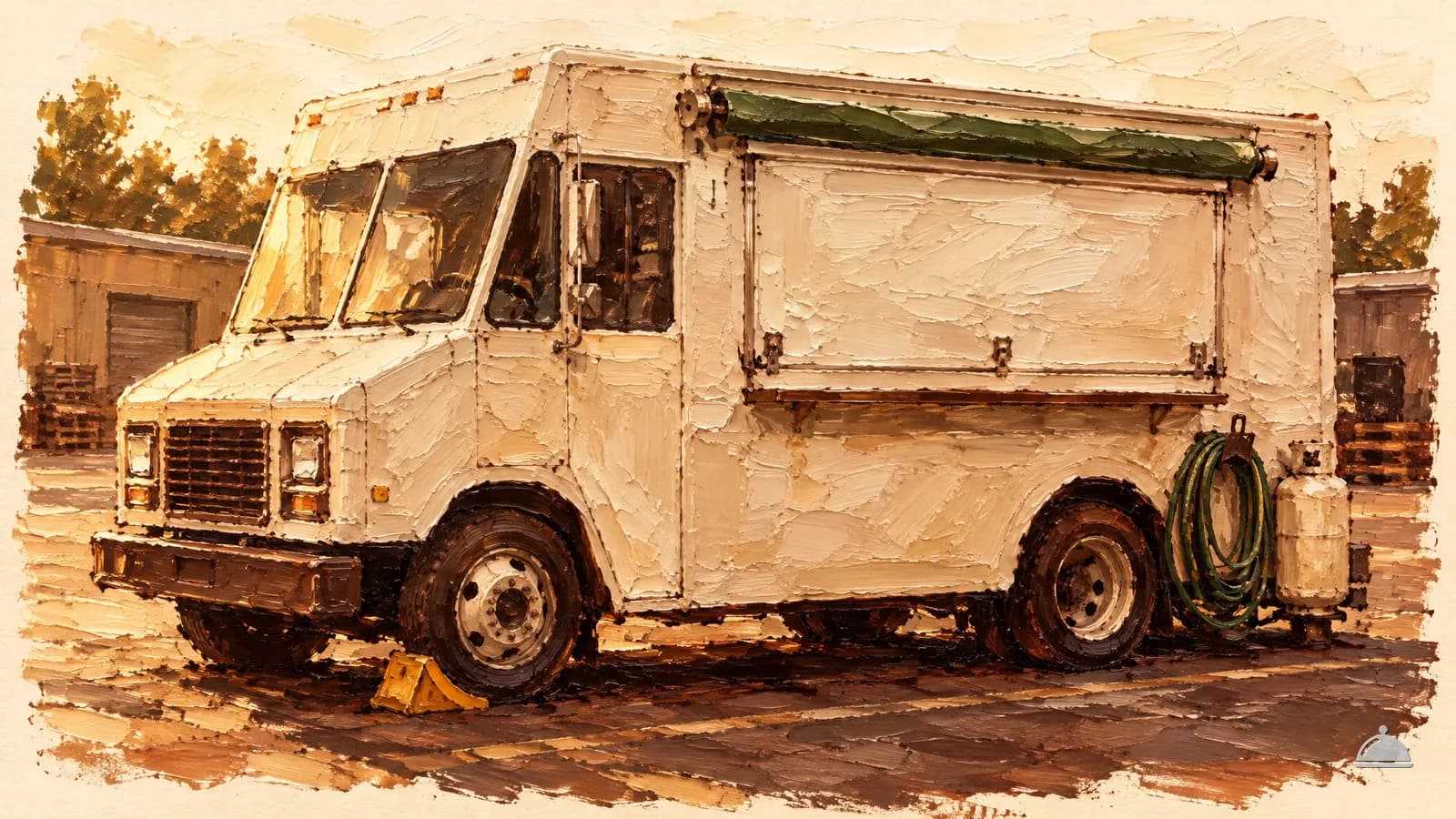
You can rent a food truck four ways: from a company that owns a fleet, from an owner who lists one, on a lease, or with its crew for one event. We read each one's own rates and terms, priced a year of renting against buying, and listed what the rate leaves out. Before you rent, check what your city needs in our food truck permits guide.
Food Truck Rental Companies at a Glance
Two fleet renters, an owner marketplace, a lease desk and an event-hire service, side by side: what each charges by the day, week and month, the deposit or cover it includes, and where the rate stops. All rates read on November 1, 2026.
| Company | Day | Week | Month | Deposit and cover | Watch for |
|---|---|---|---|---|---|
| STX Food Truck RentalsFleet renter, Texas | $250–$300 trailer · $400 truck | $600 trailer · $650–$800 truck | $1,800 trailer · $2,500 truck | $500–$2,000 refundable; basic insurance included | Mileage and crew time add 10–25% a day outside its home area |
| Foodtruckrentals.comFleet renter, Florida | $690 for 3 days | $1,065 | $1,650 | Not published; units come inspected, insured and licensed | Florida residents only, with a ServSafe certificate |
| VendibookOwner listings, nationwide | $90–$350 on listings read | Set by each owner | Set by each owner | Set by each owner; no coverage included | Terms, delivery and cleaning differ listing by listing |
| Mobile Food AllianceLease and short-term desk | Quote | Quote | Quote | Not published | Every rental and lease starts with a sales conversation |
| Roaming Hunger cateringTruck hired with its crew | $800–$1,500 minimum | — | — | Payment held in escrow until the event | You get the food and service, not the truck |
“Truck” is a drivable unit; a trailer needs your own tow vehicle. Vendibook day rates are the asking prices on its rental listings page that day, from a snow-cone trailer to a seafood trailer. Permit fees go to your city or county and sit outside every rate here.
Food Truck Rental Cost for a Business: Year One
One operator wants to run a truck for twelve months to see whether the concept holds before buying. Here is the truck line alone at each renter's monthly rate, next to buying the Florida renter's smallest trailer build outright. STX says its six-month and yearly contracts run lower than its monthly card, so the Texas lines are a ceiling.
| Route | Year one | At month 12 |
|---|---|---|
| Florida unit, rented monthly (12 × $1,650) | $19,800 | Returned |
| Texas trailer, rented monthly (12 × $1,800) | $21,600 | Returned |
| Texas drivable truck, rented monthly (12 × $2,500) | $30,000 | Returned |
| Florida 14-foot trailer build, bought | $36,000 | Yours to keep or sell |
At $1,650 a month, rent adds up to the $36,000 build after about 22 months. If you will know within a year whether the truck works, renting keeps most of that money free for food, wages and a cash cushion. Past two years, the rent has paid for a trailer you do not own.
Lines every route still pays. A commissary, where your health department requires one: as one example, Seminole Commissary Kitchen in Longwood, Florida lists $1,000 a year for self-sufficient trucks, with no truck parking. Permits, paid to the city or county (our food truck permits guide lists them by state). Insurance where the rental does not include it, propane, generator fuel and the deposit you get back at the walkthrough.
- Rent paid over 12 months
- $19,800
- Rent equals the price after
- 21.8 months
- On rent and price alone
- Renting costs less
Starts at the Florida renter's $1,650 monthly rate and its $36,000 14-foot trailer build, read November 1, 2026. A truck you own can be sold later, but it also brings loan interest, repairs and insurance, so treat the crossover as a floor.
Put your rent, commissary and permit lines into the startup worksheet of our food truck business plan template: a lender reads a rented truck as a much smaller loan.
Fleet Renters: STX Food Truck Rentals and Foodtruckrentals.com
A fleet renter owns the units, keeps them inspected and rents them out on a rate card. STX Food Truck Rentals, based in McAllen and renting across Texas, publishes the clearest one we found: trailers at $250–$300 a day and $600 a week, drivable trucks at $400 a day and $650–$800 a week, and $1,800 or $2,500 a month. It says six-month and yearly contracts are often 30–40% below its short-term rates, holds a refundable deposit of $500–$2,000 and includes basic insurance. Outside its Rio Grande Valley base, mileage and crew time add 10–25% to the daily rate.
Foodtruckrentals.com (its web address is foodtrucksrentals.com) rents in Florida at $690 for three days, $1,065 a week and $1,650 a month, and says its rentals come inspected, insured and licensed. It rents only to Florida residents and asks for a ServSafe certificate, proof of residence, a Florida ID and a credit card. If your state wants a certified manager on the truck, our ServSafe Manager vs Food Handler comparison shows which certificate that is.
Owner Listings: Vendibook
Vendibook is a marketplace where owners list their own trucks and trailers and you book with the owner. Each owner sets the daily, weekly or monthly rate, the deposit and the terms. On November 1, 2026 its listings asked between $90 and $350 a day: a snow-cone trailer in Texas asked $100 and a seafood trailer in South Carolina $350. Payment is by card once the owner approves your request.
Two lines on its pages matter more than the price. Vendibook says coverage is not automatically included with a booking, so you insure the rental yourself. And it says renting equipment does not include permission to operate at a particular site: the truck comes without a spot to park it and sell. Ask each owner whether the unit has a health permit history in your county before you pay.
Leasing a Food Truck: Mobile Food Alliance
A lease is a longer rental, usually with the truck built or sourced for you. Mobile Food Alliance covers short-term rentals through long-term leases of trucks and trailers, and Roaming Hunger's own lease page now forwards to it. It publishes no lease price, term or deposit: every lease starts with a call or an email. For a sense of a big-city lease, Roaming Hunger's New York rental guide (April 2025) puts monthly leases there at $5,500–$7,500 for a standard truck. Treat that as one market's estimate, not a quote.
Get three things in writing before you sign a lease: the monthly payment for the full term, who pays for repairs and the generator, and what happens at the end, whether you return the truck, buy it out or can sell it. A lease you cannot leave early costs more than its monthly line if the concept does not work.
Food Truck Rental for an Event: Rent the Truck or Hire the Crew?
“Renting a food truck” for a wedding, a company lunch or a festival means one of two things. You rent the empty truck and cook in it yourself, or you hire a truck that arrives with its own food and staff. The first is a rental, priced by the day. The second is catering, priced per guest with a minimum.
Renting the truck: STX budgets a one-week wedding rental in San Antonio with a 14-foot trailer at $600–$700, plus a $500 refundable deposit and $75–$200 in permits depending on the city, before any food. That suits a caterer or restaurant that already has the crew and the menu.
Hiring the truck with its crew: Roaming Hunger takes your date and place, sends back trucks that are free, and holds the payment in escrow until the event. It says a no-show truck is replaced or refunded in full. Its published pricing for 1 to 100 guests, which it bases on past bookings:
| Cuisine | Per guest | Typical minimum |
|---|---|---|
| Taco | $10–$15 | $1,000 |
| Burger, BBQ, pizza | $15–$25 | $1,500 |
| Dessert | $8–$20 | $800 |
| Beverage | $8–$20 | $800 |
Roaming Hunger puts its average booking at $1,541, with most packages between $800 and $2,500 for two to three hours of service, before tax. Under about 50 guests you will usually pay the minimum, and trucks may add a per-mile fee past a 20–30 mile radius. If you run a catering business yourself, our catering business guide compares food truck catering with restaurant-based and independent catering.
Before You Sign a Food Truck Rental Agreement
Six questions to ask any renter, owner or lease desk. The answers move the real cost more than the headline rate does.
Is the kitchen complete and approved?
STX's list of what a rental should include: a three-compartment sink and a hand sink, approved refrigeration, cooking equipment under a hood with a working fire-suppression system, and a fresh-water system with a water heater and pump.
Has the unit passed inspection in your county?
STX counts a current city or county health-permit history as part of a real rental, so the inspector already knows the unit. Ask which cities it has passed in.
Who insures it?
STX includes basic insurance and Foodtruckrentals.com says its units come insured. Vendibook includes no coverage, so you buy your own before pickup.
What does the rate leave out?
Ask about propane refills, generator fuel, mileage, late-return fees and how damage is assessed. STX names all five as costs to ask about.
How much is the deposit, and when does it come back?
STX holds $500 to $2,000 and returns it after a walkthrough at the end. Get the walkthrough checklist at pickup.
Where will you park it and prep?
A rental is the truck only. Your commissary, your vending spots and your permits are still yours to arrange.
Which Way to Rent a Food Truck Fits You?
- Choose a fleet renter by the month
- if you are testing a menu or a route for a season. STX in Texas and Foodtruckrentals.com in Florida publish their rates, include basic cover and keep the units inspected.
- Choose an owner listing on Vendibook
- if no fleet renter serves your area or you need a specific unit, like a snow-cone or coffee trailer. Budget for your own insurance.
- Choose a lease
- if the concept is proven and you want a newer truck without buying one. Get the full-term cost and the end-of-lease terms in writing.
- Choose a hired truck with its crew
- if you are feeding guests at one event and do not want to cook. Roaming Hunger's typical minimums start at $800.
- Buy instead
- if you will run the truck for longer than the months it takes rent to match the price.
Whatever you rent, settle the menu first, since it decides the equipment you need on board: our food truck menu ideas are costed for a small line. Then check what opening the truck costs on top of the rent in our restaurant startup costs guide.